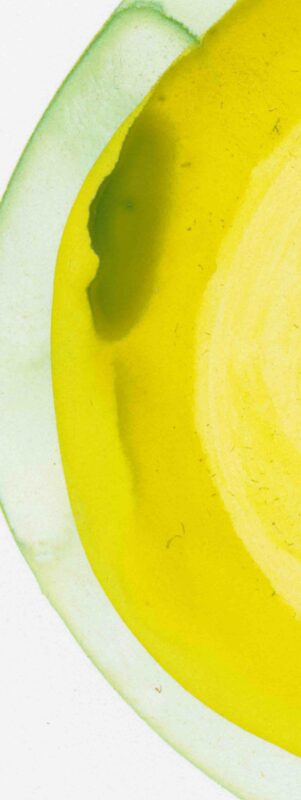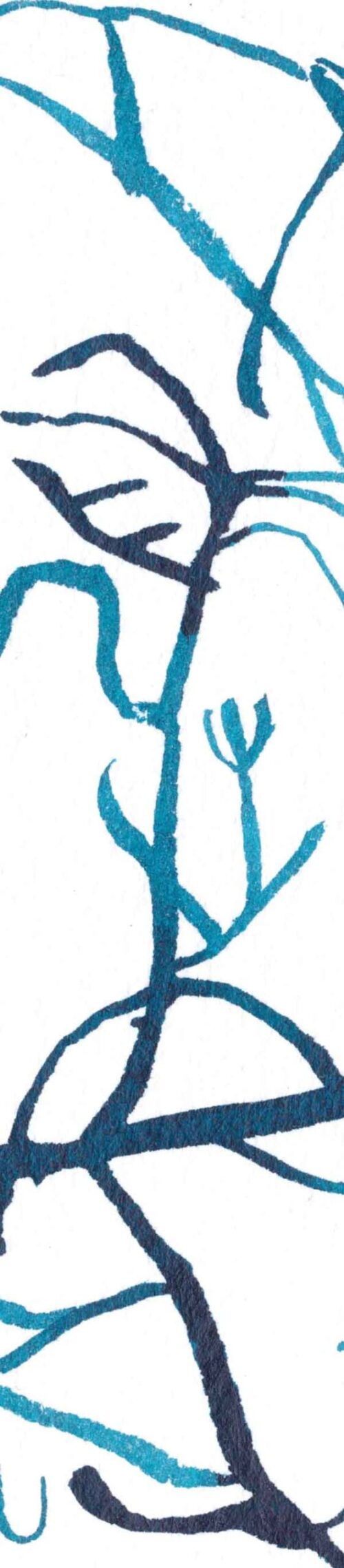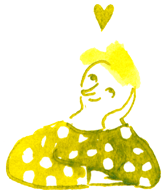

Back to the Beginning: Children’s Drawings
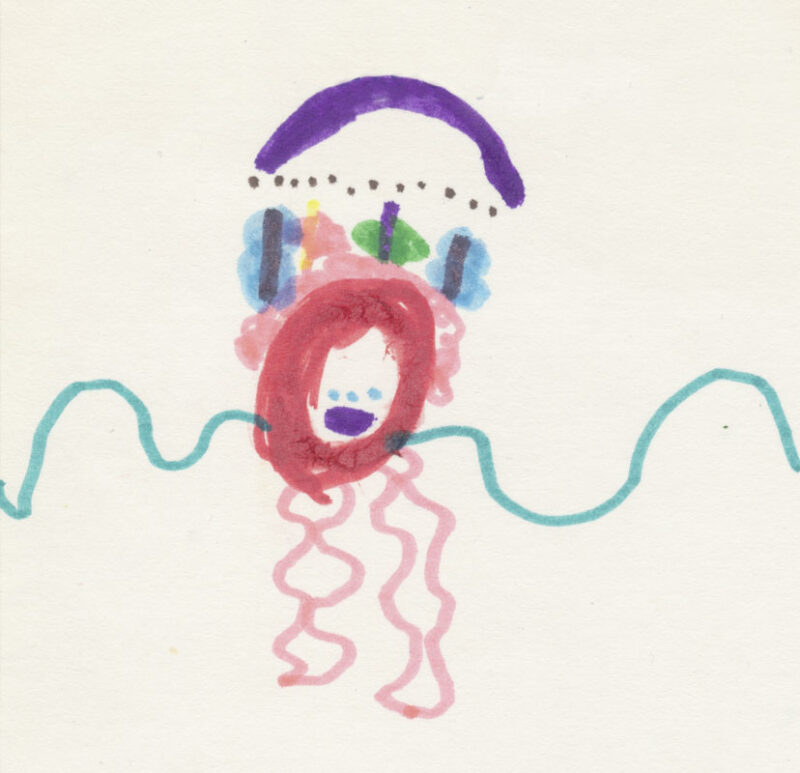
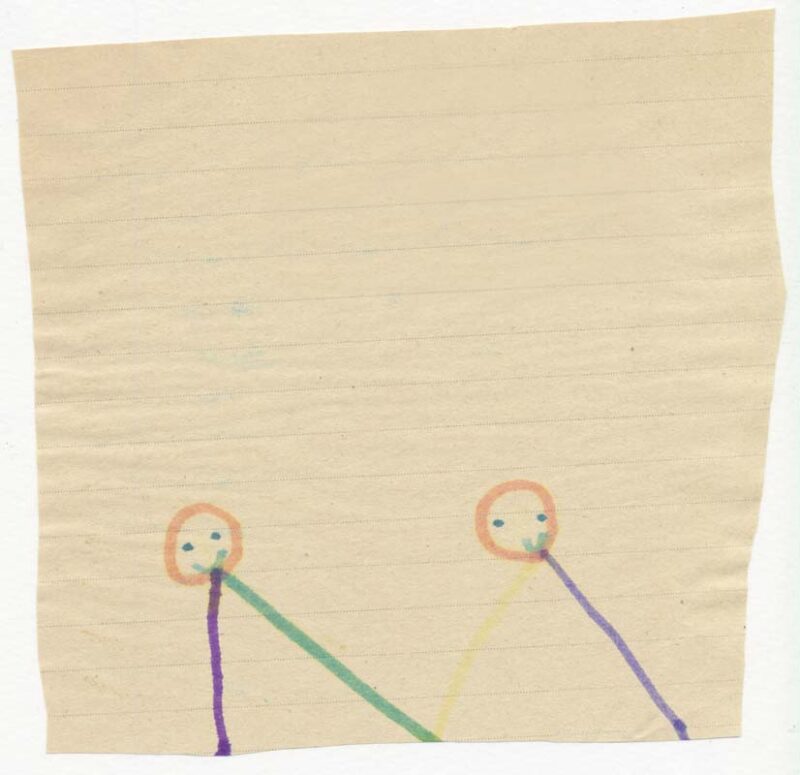
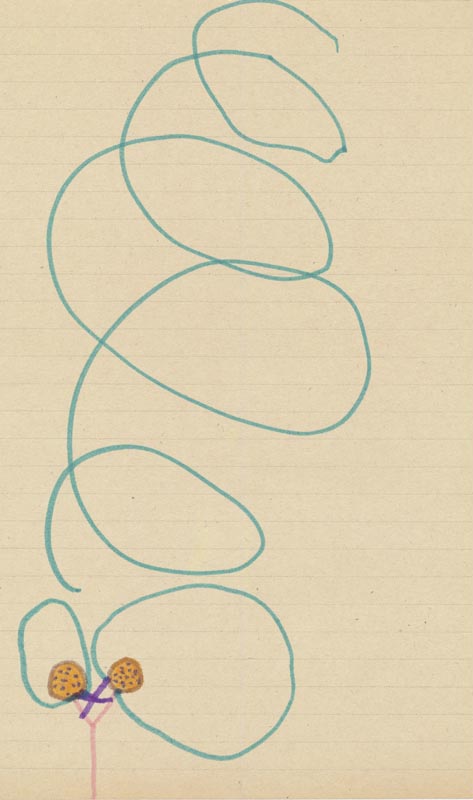
At 3, 4, 5 years old – what vigour! What courage!
No fear of pink, stars, and hearts (which I still like).
No fear of perspective, for I knew none.
No respect for shadows, for I didn’t place any.
No attempt to give my characters recognisability – I decided who was who, period.
No idea what other contemporary artists outside the school corridor were capable of. I don’t believe it would have interested me particularly anyway.
What self-confidence is shown in these drawings.
And what a sense of composition! Sometimes the paper is regularly filled with paint, sometimes a large white spot remains empty. Obviously intentionally. No fear of emptiness.
What a sense of rhythm and abstraction!
And what a contrast on one of the sheets, between the very small house and the large person beside it. Did I already know back then that people are more important than objects? Two decades later, I could name this principle of representation: perspective of significance.
What freedom and modesty in the choice of materials. Scrap paper was good enough.
How much focus and energy these drawings convey.
And how productive I was back then! Several finished drawings a day. Whereas now I need several weeks for one.
I threw away a third of my children’s drawings. Most of them had been good. I kept the “most beautiful” ones.
I found my evaluation of the drawings interesting. If I liked a drawing very much, but discovered on the back that it wasn’t mine, I could simply let it go. If my own name was behind it, I immediately felt a familiarity.
“I drew THIS!” is apparently a pride that is very flexibly applicable.
I threw away two-thirds of my drawings as a teenager. There was more pain in them; that’s where the insecurity began. Once an emotion has been expressed, I no longer need to keep it in the form of a drawing. Its purpose is fulfilled.
After that came art school, where I learned to channel this childlike energy without damaging it. We developed techniques to stay fresh and spontaneous before picking up the brush for the 10,000th time.
Then it was about showing perseverance. The child I was drew simply in freedom. If illustration is to be practised as a profession, constraints come into play.
These constraints are a blessing, for they invite me to open up and explore new visual places.
Nevertheless, evaluation criteria remain important:
– “Do I enjoy drawing?”
If the joy has completely disappeared, something has gone wrong.
– “Does a certain lightness reach the viewers?”
If it is missing, I may reflect on at which point in the process I lost it myself, so that its absence is palpable.